
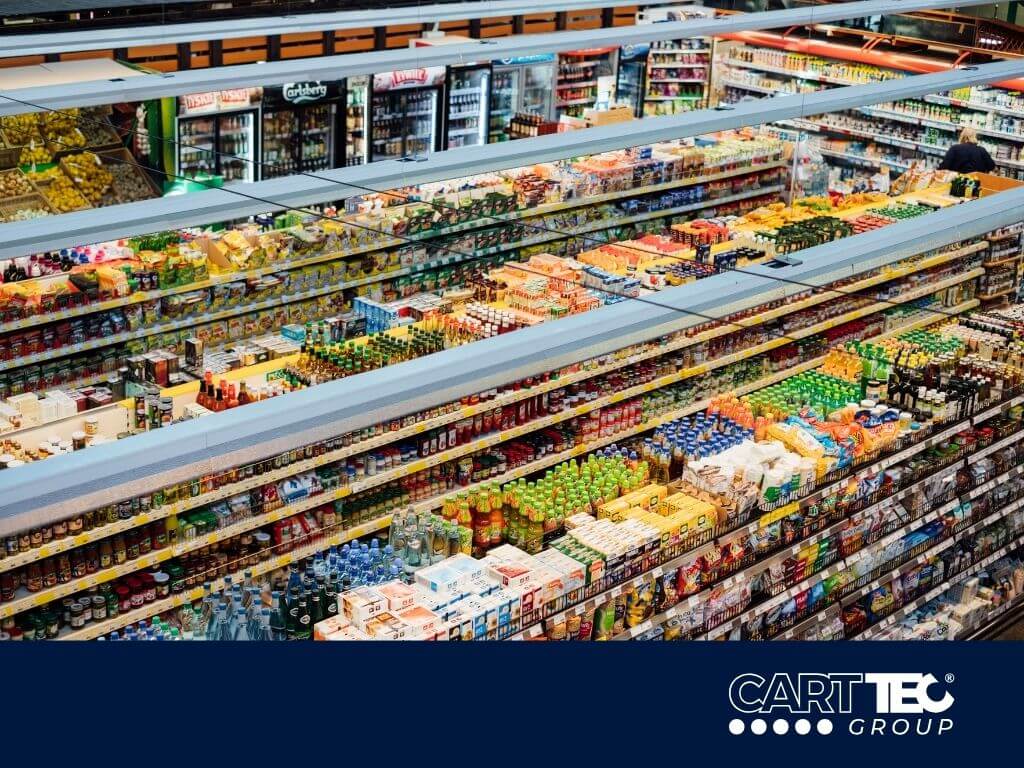
A supermarket has many things to manage every day: products, customers, shopping carts, losses, available resources, and more. When some of that management relies on manual checks, identifying a problem can take time and requires staff to spend part of their day on monitoring tasks.
Our supermarket technology automates certain actions and prevents losses before they become a significant expense.
Supermarket Technology Also Protects Resources
CartControl uses a shopping cart locking perimeter that prevents carts from leaving the authorized area. When a smart wheel receives the signal as it crosses the designated boundary, the cart locks and cannot leave the permitted area.
Purchek addresses another risk: leaving without going through checkout. The system identifies unauthorized exits and locks the cart, triggering an alert when it detects these attempts.
In both cases, the technology responds as soon as the incident occurs, rather than relying solely on an employee to notice it.
Knowing Where Shopping Carts Are Is Part of Effective Management
The problem is not always a shortage of carts. Sometimes they accumulate in areas where they are not needed, forcing staff to move them around constantly.
CartTrack is supermarket technology that makes it possible to locate carts in real time, receive alerts when an area needs more carts, and review historical data to identify usage patterns and distribute carts more effectively throughout the store.
Smart Shopping Carts and Asset Information
Smart shopping carts help streamline day-to-day operations.
With solutions such as Horustec, supermarkets can centralize asset information and access data on asset locations, maintenance, incidents, and management.
This information helps teams anticipate problems instead of waiting for them to arise, allowing staff tasks to be organized much more efficiently.
More Information Leads to Better Decisions
CartControl, Purchek, CartTrack, and Horustec address different needs, but they share one goal: giving supermarkets greater control over what happens on their premises.
Preventing losses, knowing where carts are and whether they are available, managing assets, and having useful operational information enable staff to make more data-informed decisions and resources to be managed more efficiently.
The question, then, is not whether a supermarket can adopt technology, but how much that technology can improve its operations.
Carttec supermarket technology does not replace the work of the store management team. Instead, it helps the team understand what is happening, identify issues early, and spend less time on monitoring tasks that can be automated.

