
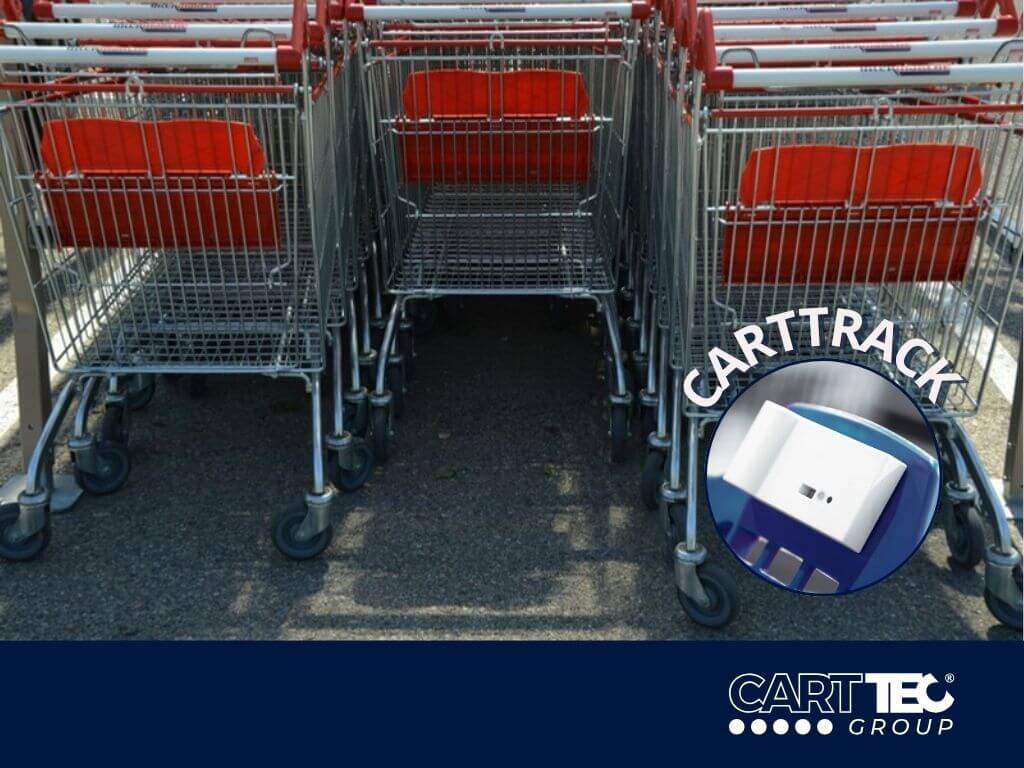
The abandonment of trolleys outside their designated areas is no longer an isolated occurrence, but a phenomenon that is beginning to generate costs, incidents and new control requirements. In response, technology applied to trolley traceability is emerging as a key tool to improve availability, optimise operations and strengthen the customer experience.
In March, a Canadian city decided to take drastic action: imposing fines of more than €100 for each trolley abandoned in public spaces, following a rise in incidents in streets, parks and urban areas.
What for years was perceived as an isolated customer behaviour—leaving the trolley out of place—is now beginning to be understood as a matter of conduct. The lack of control over these assets, which constantly move between the supermarket interior and the car park, is generating an increasingly visible impact.
Trolleys blown by the wind, left in parking spaces or even outside the commercial premises reflect a clear reality: traditional systems based solely on trolley bays and manual collection are no longer sufficient to manage their traceability.
The retail sector is starting to rethink the role of trolley bays, which are no longer simple storage points but part of a broader control system. The key is no longer just grouping trolleys together, but knowing where they are at all times. In this respect, our shopping cart shelter is the ideal solution.
This is where systems such as CartTrack come into play, specifically designed to improve trolley availability in supermarkets and hypermarkets. Using RFID technology, the system incorporates control points in key areas, such as main entrances, trolley bays or parking zones, where it automatically records the passage of each trolley via a unique passive tag.
In this way, CartTrack provides a clear, real-time view of how many trolleys are available in each location. When a shortage is detected in a specific area, the system generates immediate alerts, enabling rapid action, facilitating trolley redistribution and anticipating demand.
Rather than locating each trolley at all times, the key lies in ensuring that availability is always guaranteed where the customer needs it, thereby improving store operations and the overall shopping experience.

